Philip Guston (1913–1980) was an American painter whose career spanned social realism, abstract expressionism, and a late-career turn toward cartoon-like figuration. His work is marked by recurring motifs: hooded figures, shoes, studio tools, clocks, lightbulbs, cigarettes, and self-referential characters that often stand in for the artist himself.
The Guston Foundation commissioned Other Means to design and develop a new online catalogue raisonné that includes an illustrated chronology of the artist’s life, selected works, and a curated selection of his writing and talks. The site functions both as a research tool and as a way to encounter his work through exploration and play.
Drawing Letters
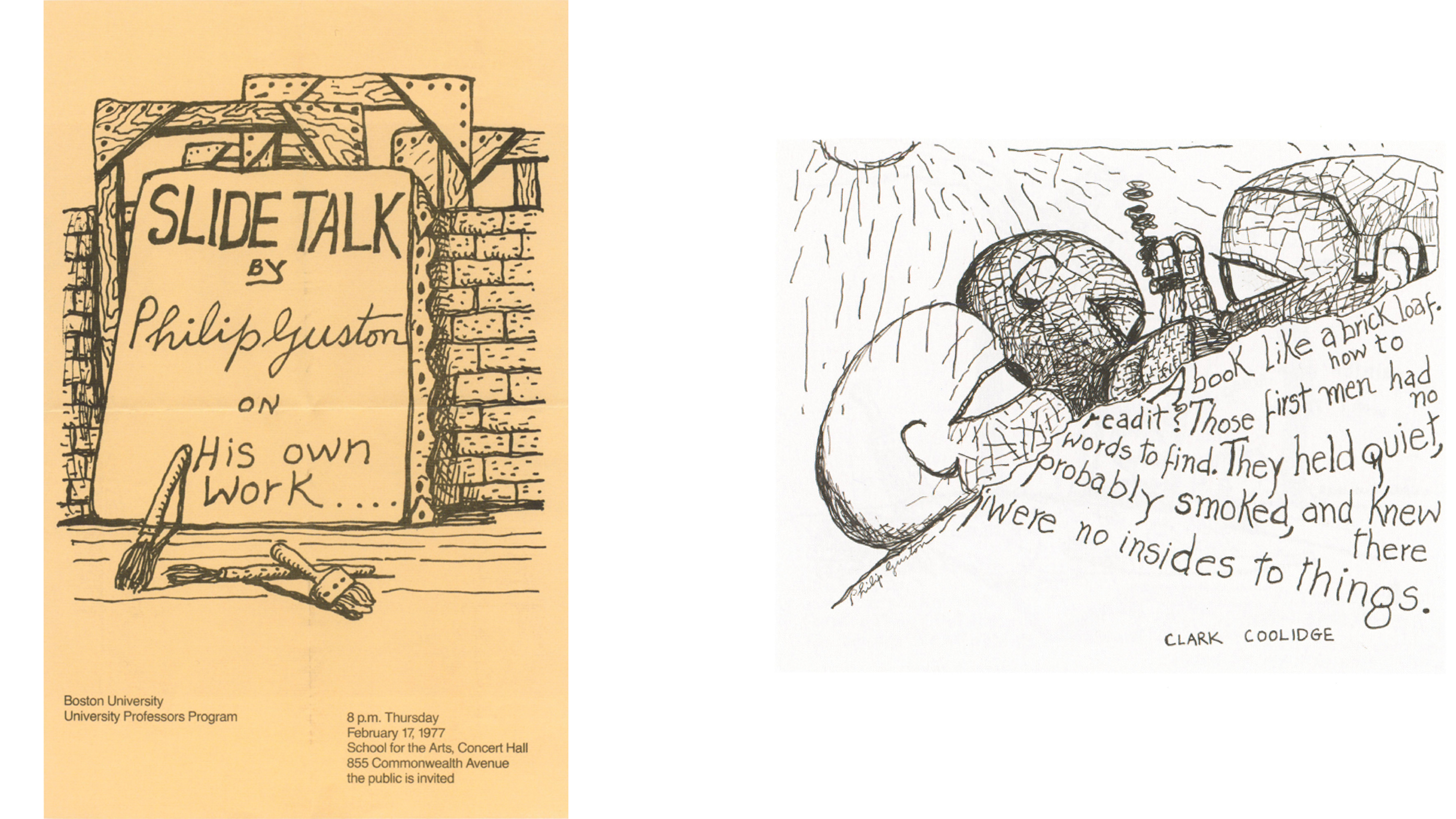
Guston’s hand-drawn lettering is a recurring feature of his late work, appearing in paintings, exhibition announcements, notebooks, and collaborations with poets.
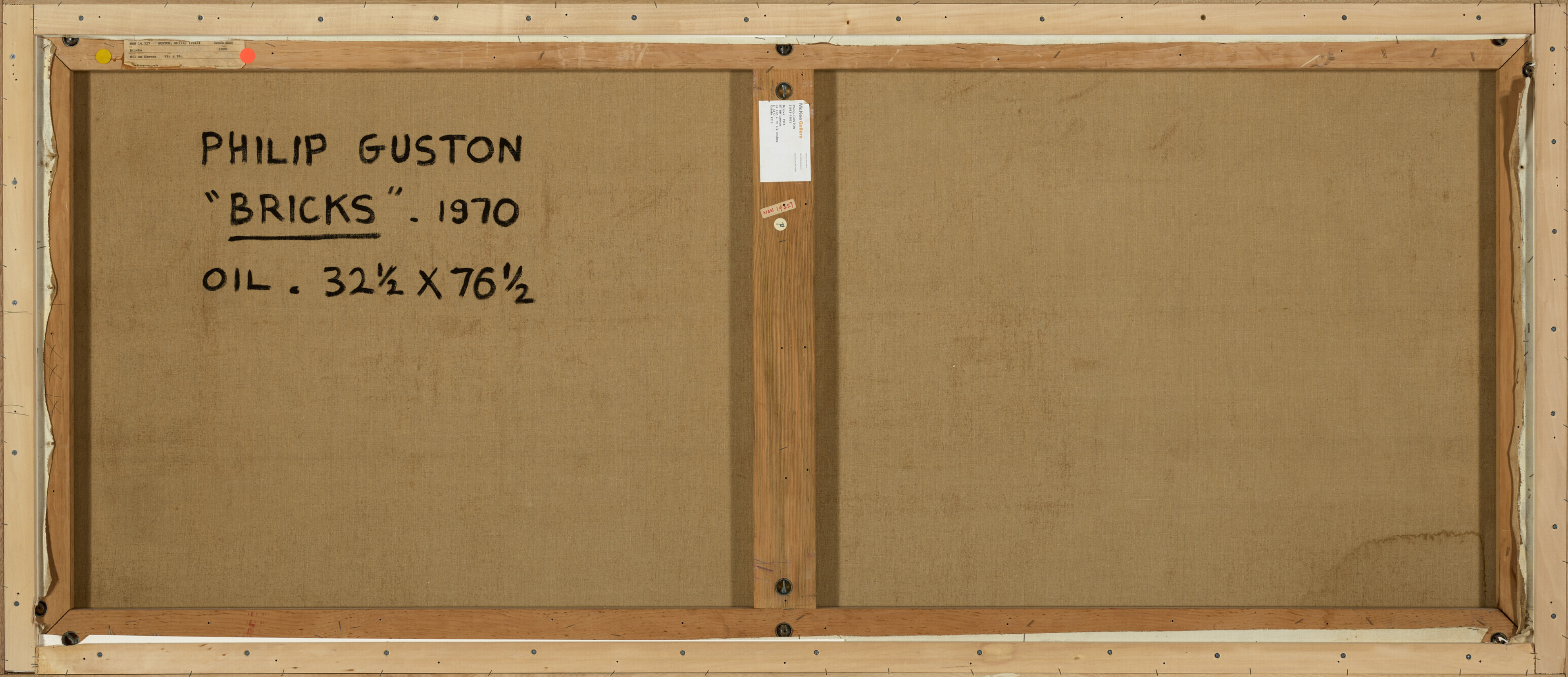
Distinct from his everyday handwriting, these letterforms were simplified and deliberately constructed, functioning as graphic elements within his broader visual language.
These references informed the development of a new typeface drawn exclusively for this website.
Guston’s hand-drawn lettering is a recurring feature of his late work, appearing in paintings, exhibition announcements, notebooks, and collaborations with poets.
Distinct from his everyday handwriting, these letterforms were simplified and deliberately constructed, functioning as graphic elements within his broader visual language.
These references informed the development of a new typeface drawn exclusively for this website.
System
The Guston Foundation website features a custom typeface informed by the everyday typography that likely influenced Philip Guston’s own lettering, which appears throughout his paintings, exhibition announcements, and collaborations with poets.
Guston Sans + Serif Alt Characters
Guston Sans and Serif replicate the inconsistencies that appear in his lettering through an OpenType feature that randomizes stylistic alternates within words.
Guston Serif

Guston Sans


The website’s color palette is based on a select group of deep pigments that recur throughout Guston’s work.
Guston’s studio

Red #EA6459

Blue #24539C

Green #418B68

Mars Black #141413

Gray #A8A8A8

Titanium White #F0F0F0

Website
The website serves as a comprehensive record of every known work made by Philip Guston. A custom endpoint for the Foundation’s proprietary collection management software was developed to pull vast amounts of artwork, exhibition, and museum data and images spanning the artist’s career and beyond.
Beyond its function as an online catalogue raisonné, the site encourages visitors to explore a curated selection of Guston’s broader collection of works, writings, and talks.
Illustrated Chronology
The site also features biographical information about Guston’s life, including a chronology illustrated with a large selection of images and ephemera, along with a collection of his writing and talks.
Artwork Viewing Modes
Artwork entries contain detailed information and high-resolution images that can be enlarged to appreciate Guston’s brushstrokes and line work.
Contextual Labeling
A custom tool was built that allows the Foundation to tag installation photographs with the artworks that appeared in each exhibition, making it easier to research the history of each work.
Catalogue Raisonné Filtering
Researchers can filter the catalogue raisonné by decade, type, and medium, and choose their preferred viewing settings, including an option that displays results in relative scale.
Collection Maps
An interactive map helps researchers find museums with Guston’s work in their collection.
Interactive Media
Archival audio of Guston’s lectures accompanies the transcriptions on the site and forms the basis for interactive slideshows.
Night Mode
At midnight in a user’s local time zone, the website automatically switches to dark mode, with an overlay of paintings—Night (1972), Painter at Night (1979), Night Room (1976), Table at Night (1975)—that reflect Guston’s habit of painting at night when, “without daytime distractions, he could work long hours without interruption.”
Night Mode