

The Japan Society is a New York–based cultural institution that fosters greater understanding between the United States and Japan through exhibitions, performing arts, film, education, and other public programs. In 2023, the Japan Society presented Out of Bounds: Japanese Women Artists in Fluxus, and Other Means designed the entire exhibition.
References
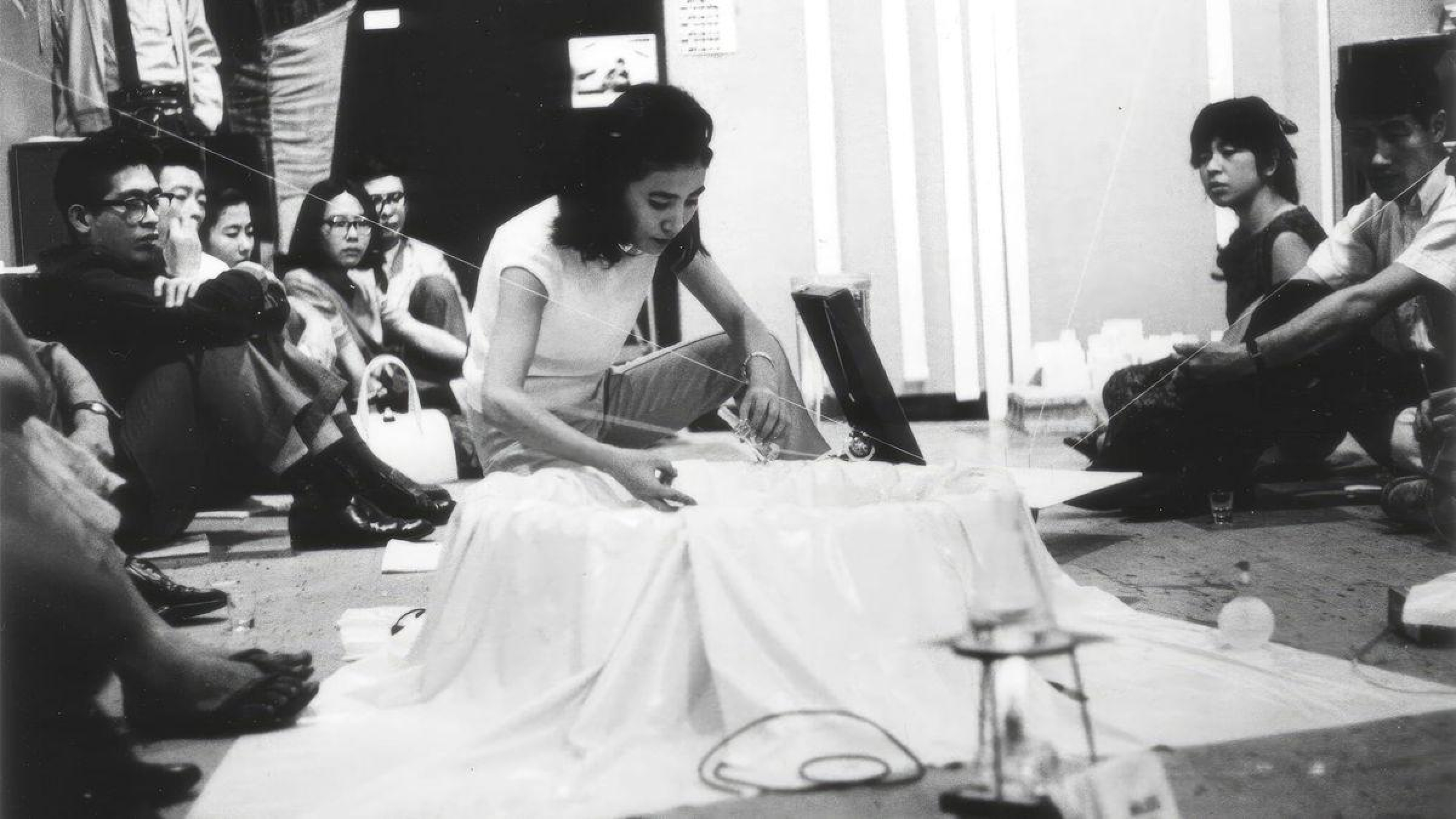
Emerging in the early 1960s, Fluxus was a loose international network of artists, composers, and poets working across disciplines. Practitioners developed experimental forms that privileged instructions, scores, games, and collective participation, often resisting the permanence and commodification of the art object. Out of Bounds foregrounded four Japanese women whose contributions as artists expanded the movement’s reach and shaped many of its most enduring ideas.
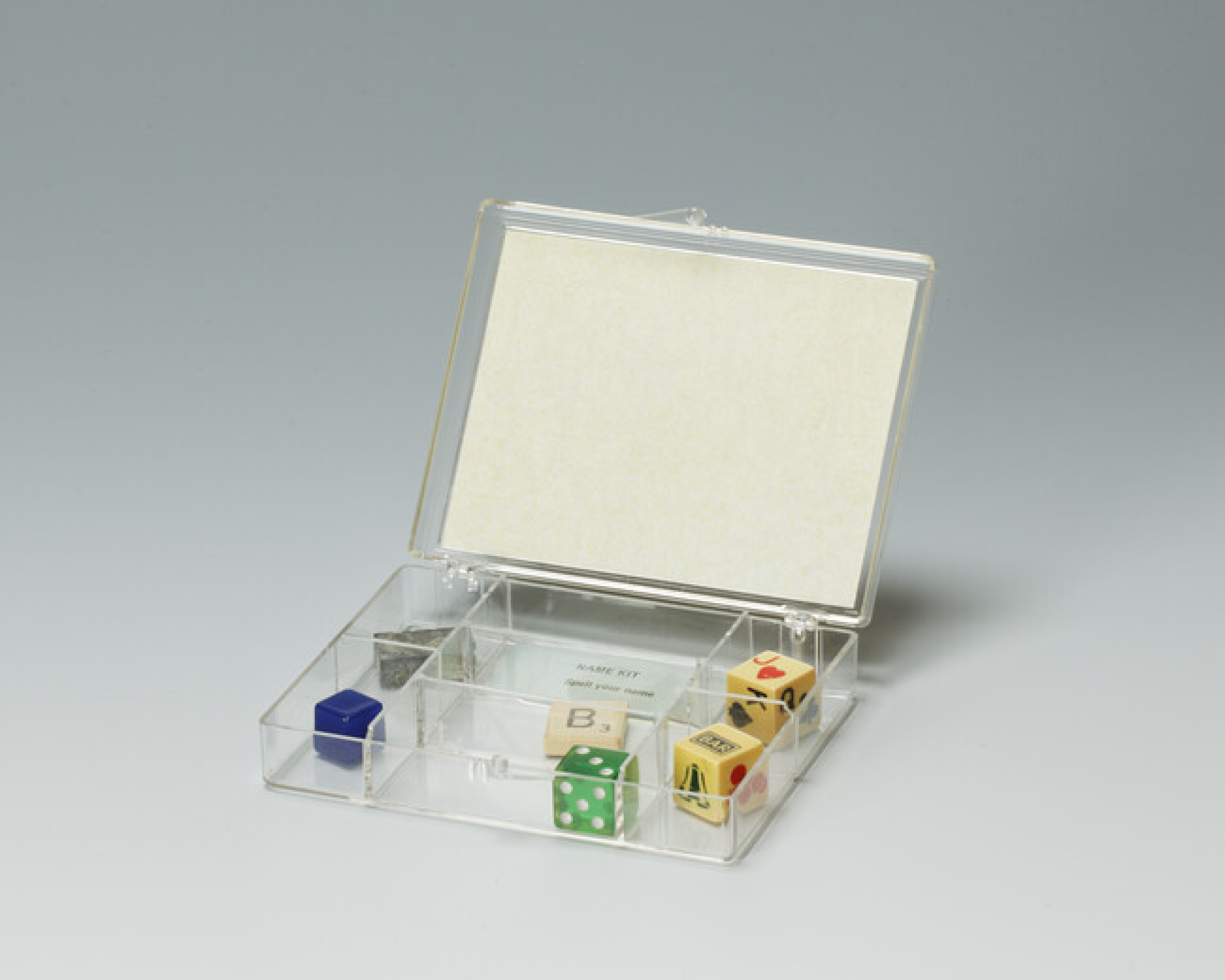
Conceived as portable exhibitions, Fluxkits assembled instructions, objects, and printed matter into inexpensive editions that could be widely distributed, exemplifying Fluxus’s rejection of the singular art object. They contained smaller compartments, ensuring all items had their rightful place.
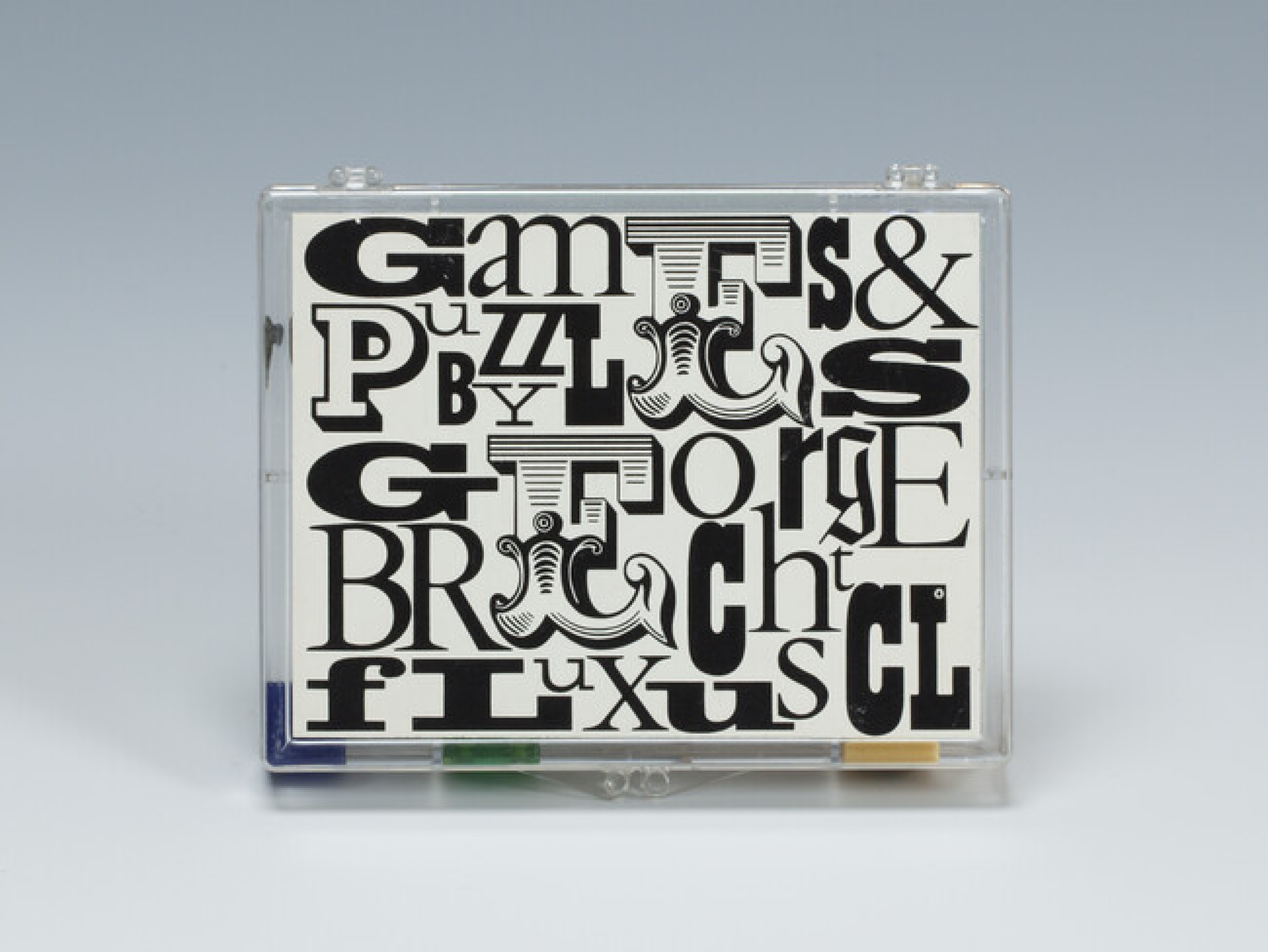
As demonstrated by the lid of this Fluxkit by George Brecht (1965), the movement embraced typographic eclecticism, combining disparate typefaces, scales, and layouts into dense, playful compositions, which became a primary source of inspiration for the Out of Bounds identity.
Emerging in the early 1960s, Fluxus was a loose international network of artists, composers, and poets working across disciplines. Practitioners developed experimental forms that privileged instructions, scores, games, and collective participation, often resisting the permanence and commodification of the art object. Out of Bounds foregrounded four Japanese women whose contributions as artists expanded the movement’s reach and shaped many of its most enduring ideas.
Conceived as portable exhibitions, Fluxkits assembled instructions, objects, and printed matter into inexpensive editions that could be widely distributed, exemplifying Fluxus’s rejection of the singular art object. They contained smaller compartments, ensuring all items had their rightful place.
As demonstrated by the lid of this Fluxkit by George Brecht (1965), the movement embraced typographic eclecticism, combining disparate typefaces, scales, and layouts into dense, playful compositions, which became a primary source of inspiration for the Out of Bounds identity.
Exhibition Design

Vitrines and Displays
The primary structural elements of the exhibition were custom-designed and fabricated vitrines and vertical displays that recreated the spirit of interaction, play, and participation that was at the core of the Fluxus movement.


The design of the vitrines drew direct inspiration from Fluxkits—which were boxes containing a variety of artist multiples, texts, and games.


Vernacular Typography
The exhibition’s graphic identity featured a mix of contemporary vernacular display fonts, one for each artist. The captions to the works were placed on the walls—which were otherwise completely devoid of artworks—inverting the hierarchy of the art objects and the ephemeral.


This system was translated across formats, including wall vinyl, object labels, and the exhibition catalogue.
Out of Bounds Newspaper


